
Mediterranean Salmon Bowl
Mediterranean salmon bowl – a healthy easy dinner recipe that is full of flavor, super satisfying and ready in around 30 minutes. To make this low-carb / keto use this low-carb hummus instead of regular hummus.
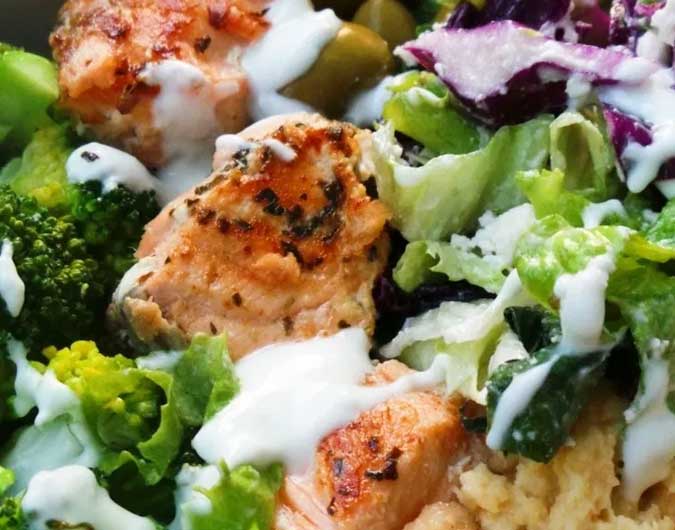
Mediterranean Salmon Bowl
Course: KetoCuisine: AmericanDifficulty: Easy2
servings15
minutes15
minutes1
hour10
minutesMediterranean salmon bowl – a healthy easy dinner recipe that is full of flavor, super satisfying and ready in around 30 minutes. To make this low-carb / keto use this low-carb hummus instead of regular hummus.
Ingredients
8oz/ 250g salmon filet
1 tsp basil, dry
1/2 tsp crushed red pepper
2 garlic cloves, minced
1 cup broccoli florets
2 Tbsp olive oil
- Salad
1 cup lettuce, chopped
2/3 cup purple cabbage, chopped
handful basil leaves
1/4 cup feta cheese, crumbled
1 Tbsp lemon juice
10 olives, pitted
2 tbsp hummus or
low carb hummus
Directions
- Rub the salmon with the dried basil, crushed red pepper flakes, and 1 clove garlic. Let it sit like that for a few minutes while you’re making the broccoli and the salad.
- For the salad chop the cabbage and massage it in a bowl with the lemon juice. Then add the lettuce, basil, olive oil, feta cheese and 1 clove of minced garlic. Mix everything well together and add salt and pepper if needed. I didn’t need to do it, because the feta was very salty. You can also make the hummus, if you haven’t made or bought any.
- For the broccoli, I chopped the florets and stirred them for 2 minutes in a non-stick pan with 1 Tbsp olive oil. Then I turned off the heat and covered with a lid for a few minutes.
- After that, I took out the broccoli and added the salmon to the same pan, because I don’t want to wash 3 pans for one meal. I cooked it at medium/medium high and covered with a lid, flipping half-way through. Now, you can use whole salmon filets, I had cut mine into a few chunks as you can see in the pictures. After 6-7 minutes the salmon is ready and you can start arranging the bowl.
- At the bottom, we put the salad, then add the olives, hummus, broccoli and in the middle the salmon. Add salt and pepper to taste and enjoy. This recipe makes 2 servings.
Notes
- Meal Prep Option: this salmon bowl recipe makes around 2-3 servings. You can meal prep it by adding the olive oil and garlic to the salad right when you’re going to have it. I like to keep things in separate containers in the fridge and for no longer than 3 days.
- Low Carb Option: You can easily make this recipe low-carb or keto by using low-carb hummus instead of regular hummus.
- Salad Options: Instead of the cabbage salad, you can also make this tomato cucumber salad or this tomato arugula and avocado salad.
Nutrition Facts
2 servings per container
- Amount Per ServingCalories580
- % Daily Value *
- Total Fat
40g
52%
- Saturated Fat 9g 45%
- Trans Fat 0g
- Cholesterol 95mg 32%
- Sodium 600mg 27%
- Total Carbohydrate
20g
8%
- Dietary Fiber 8g 29%
- Total Sugars 4g
- Protein 38g 76%
* The % Daily Value tells you how much a nutrient in a serving of food contributes to a daily diet. 2,000 calories a day is used for general nutrition advice.
Notes
This Mediterranean Salmon Bowl is a simple skillet-based meal built around seasoned salmon, lightly cooked broccoli, and a fresh chopped salad. The salmon is rubbed with dried basil, crushed red pepper, and garlic, then cooked in a pan until just done. The bowl is assembled with a base of lettuce and cabbage salad, topped with olives, feta, hummus, broccoli, and the cooked salmon.
The recipe works well because each component is prepared quickly and layered to keep flavors distinct. Massaging the cabbage with lemon juice softens it slightly, helping it blend better with the lettuce and herbs. Cooking the broccoli briefly before covering allows it to stay tender without becoming overcooked. Using the same pan for the broccoli and salmon streamlines cleanup while still developing good flavor in the fish.
This dish fits easily into everyday home cooking and comes together in a short amount of time. Components can be prepped ahead and stored separately, then assembled when ready to eat. The structure stays the same even with small adjustments, such as using low-carb hummus or swapping in a different simple salad base.